
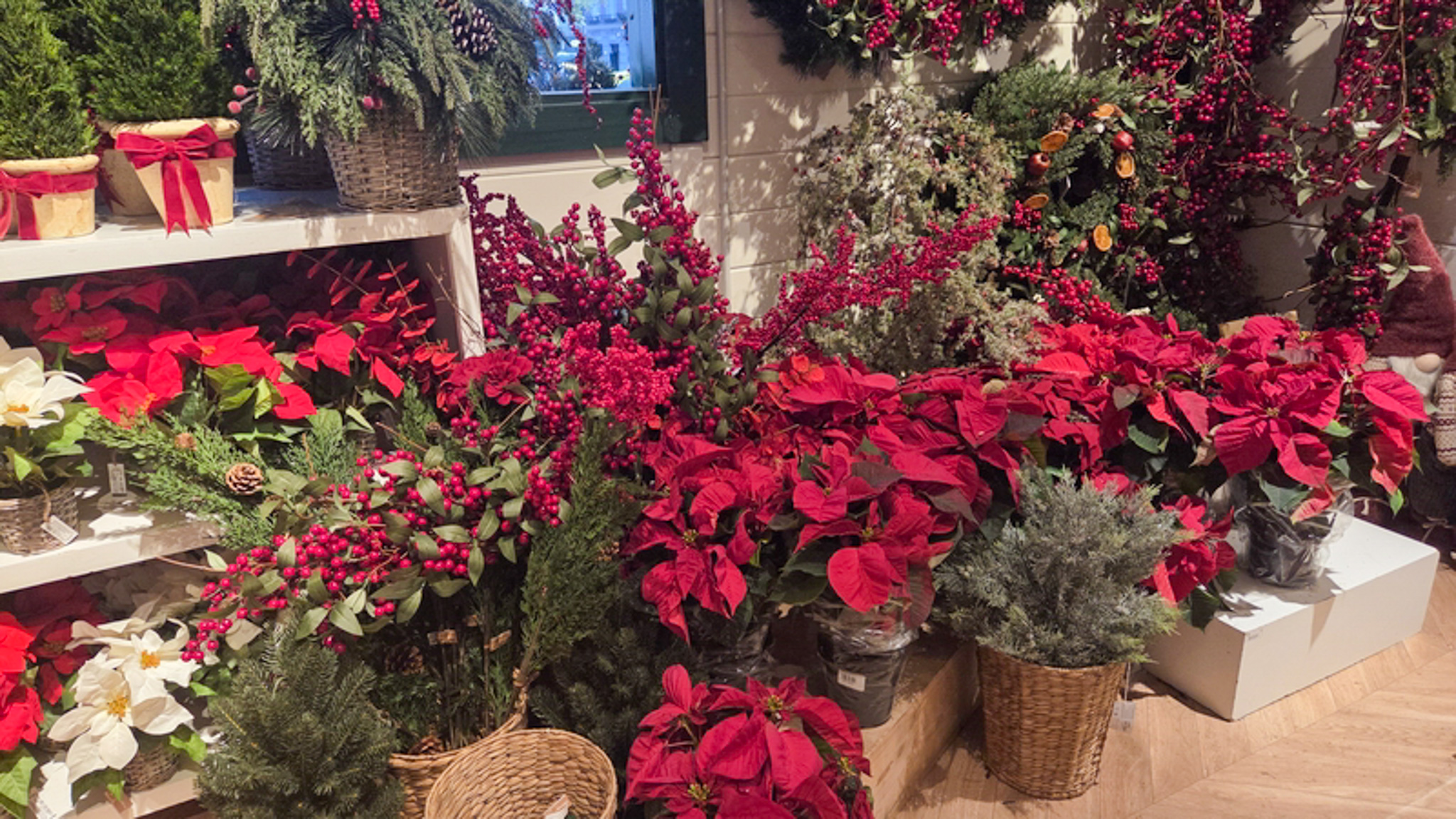
Don’t get me wrong, I absolutely love both poinsettias and holiday cactus; it just wouldn’t be a festive holiday season without them adorning my mantel. But this year I decided it was time to bring some variety to my decorating life. After a lot of serious in-store study, these are the two plants I brought home this year (and two poinsettias…and one very small holiday cactus that called out to me as I was checking out).
Phalaenopsis amabilis & Cyclamen: Each plant brings something unique and meaningful to my holiday decorations that I’d like to share with you, our readers.
Phalaenopsis amabilis
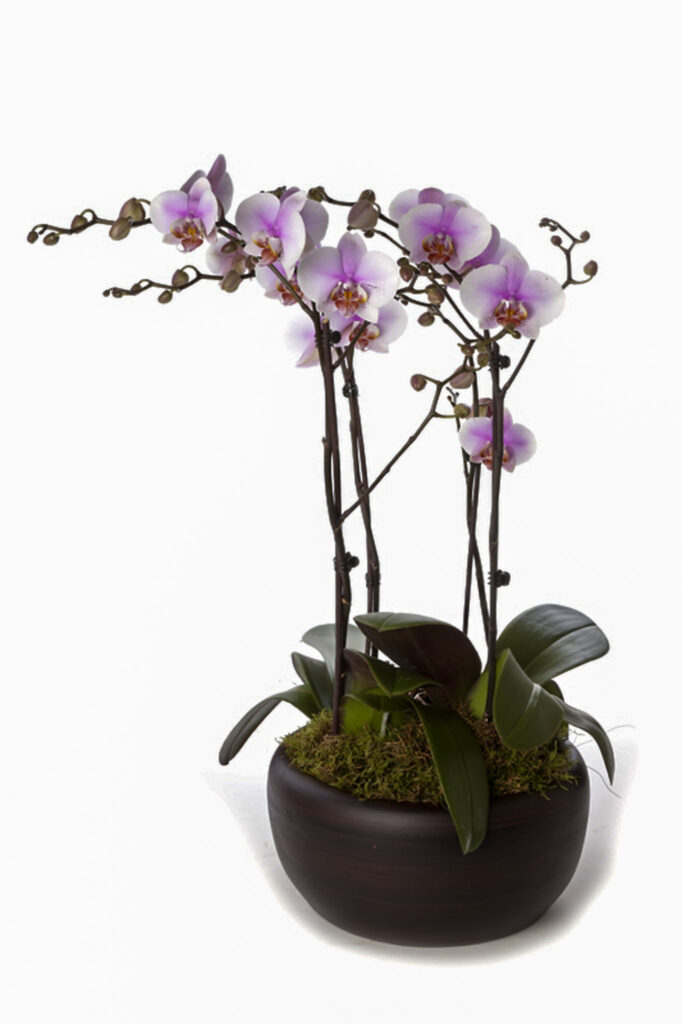
As my husband looked around the room at our new floral display, his first question was definitely NOT what I expected. (I thought it would center around dollars spent.) His first question was “Why orchids for Christmas?” Because I had asked myself the same thing, I was able to give him an answer. In the language of flowers, orchids symbolize prosperity, good health, well wishes and most important of all, true love. Since they speak to the very heart of the holidays, what could be more appropriate than orchids?
The variety of orchid most commonly seen in retailers right now is the Phalaenopsis, or Moth Orchid. With their glossy green leaves, gracefully arching stems and gorgeous sprays of butterfly- shaped blossoms (hence the name), Moth Orchids bring a quiet elegance to any space.
Phalaenopsis are considered one of the easiest orchids to grow, so they are a great choice for novice orchidist (yes, the real term!). Unlike so many other houseplants, orchids require a low light situation. The light from an east window is usually ideal, although filtered light from south and west windows can also work. Just make sure that your orchid does not sit in strong, direct sunlight. If the leaves are a bright olive green, then the lighting is correct. If the leaves are a darker shade of green, then the plant is not getting enough light; tinges of red mean the light is too strong. If the plant does not rebloom within a reasonable time frame, then move it to a slightly higher light location.
Because of their structure, Moth orchids do not have the capability to store a great deal of water; they do not tolerate long periods of drought or long stretches of standing water well. When the plant is in flower, water every ten days or so. When it is in the growing phase, water weekly. Experts in orchid care recommend watering with tepid in the morning, letting water run through the pot for several minutes and then blotting away any standing water from the plant’s crown.
Blossoms on Phalaenopsis amabilis tend to last a long time. When they are finished blooming, you have two different options. You can cut the stem down to the level of the leaves and within a year, the plant will reward your patience with bigger, stronger blooms. If patience is not your strong suit, then cut the stem but leave two nodes. Within two or three months you will be rewarded with blooms similar to the original ones.
Cyclamen
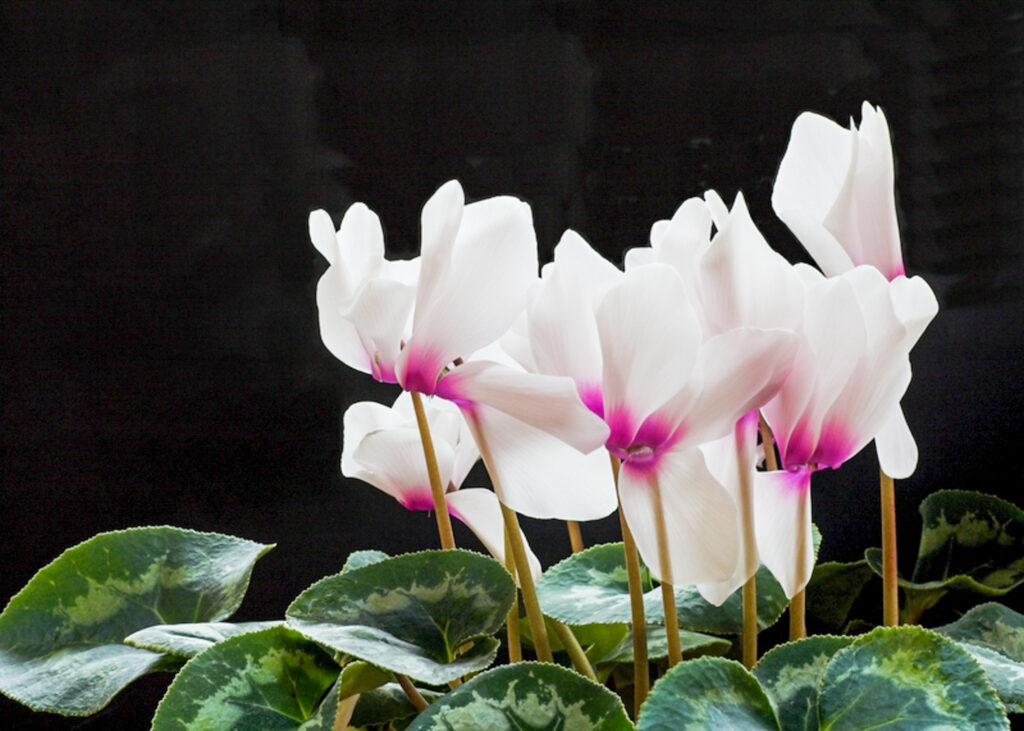
The phrase Last but not Least popped into my mind as I started to write about cyclamen plants for the holidays. Not only are they last on our list of holiday suggestions, but they are often the last plant to be purchased at retail outlets. I’ve even heard people say, “Oh don’t buy that – mine died as soon as I brought it home.” Hopefully, we can set the record straight about keeping these stunning plants that stand for lasting love healthy and happy.
Native to an eastern Mediterranean climate, cyclamen bloom when the temperatures are cool and the air is damp. During the hot, dry summer months, they go dormant. Their leaves turn yellow and wither back to the ground, growth stops and they rest, storing energy in their tubers. When cool, damp weather returns, the native cyclamen once again begin to vigorously grow and flower.
The key to cyclamen as houseplants then, is to replicate as closely as possible their native conditions. Unlike the many tropicals that need warm temperatures to thrive, cyclamen plants want it cool. Daytime temperatures that hover in the low 60s F and nighttime temperatures of 40 degrees are ideal. Since temperatures near a window tend to be cooler than the interior of a room, window sills can be a good display space for these plants.
While in bloom, cyclamen need bright light. South and west facing windows are the top choices. East windows can also work, but try to avoid a northern orientation because there just isn’t enough light to pull strong blooms.
Watering is probably the biggest hurdle to growing long-lasting cyclamen. It’s best to let the soil completely dry out between waterings, but the plant shouldn’t reach the wilting stage. Underwatering will quickly cause the blooms to fade and will eventually kill the plant. I have found that judging water needs based on the weight of the pot is an effective way to judge whether or not the plant needs water. A heavy pot means no water is needed; a light one says “Water me please.” Water the soil thoroughly but don’t let water sit on the crown or remain in the saucer.
To encourage reblooming, take the time to snip tired blossoms near the base of the plant. If seed pods begin to develop, snip those off too. The more energy the plant puts into forming seed, the less it will have to produce flowers. In the plant world, seeds are necessary for the survival of the species and much more important than blooms.
In early spring, when the cyclamen quits blooming, let the soil completely dry out. Throughout the warm summer months, store it in a dark, cool, dry place. As temperatures begin to drop in the fall, bring the pot out and begin watering. If the tubers are still firm, your plant should begin to re-emerge and put on another splendid show.
By: Sandra Nelson
